


Exhibitions Schedule 2025
*No advance reservation is required. However, we may ask guests to wait at the entrance depending on the crowd condition inside the museum.
Early Spring Exhibition 2025
Japanese Ceramic Collection of the Hosokawa Family:
Works of Kawai Kanjiro and Tea Ceremony Utensils
- Period
- Saturday, January 11 –Sunday, April 13, 2025
- Closed
- Mondays except January 13 and February 24, 2025
Closed on January 14 and February 25, 2025 - Opening hours
- 10:00am to 4:30pm (last entry 4:00pm)
Eisei Bunko Museum houses a wide range of Japanese ceramics in its collection. Yatsushiro ware, (also known as Koda ware or Hirayama ware) was first produced in Koda, Yatsushiro City in Kumamoto Prefecture by a pottery called Sonkai (Agano Kizo), who was invited by Hosokawa Tadaoki, the 2nd head of the Hosokawa family. Yatsushiro ware is known for its decorative technique in which a design is inlaid with clay on the ceramic body, and it was a popular gift for the shogun’s envoys as the product of the official kiln patronized by the Kumamoto clan.
Kawai Kanjiro (1890-1966) was a potter who was active from the Taisho to Showa periods. His early works following the style of ancient Chinese ceramics attracted attention, and he learned much from the Chinese ceramic collection of Hosokawa Moritatsu (1883-1970), the founder of the Eisei Bunko Museum. Kanjiro later became a member of the ‘Mingei movement’, which led to a significant change in his style.
We present Yatsushiro ware and the works by Kawai Kanjiro for the first time in about 20 years in this exhibition. Please take the opportunity to visit our museum and discover their charms.
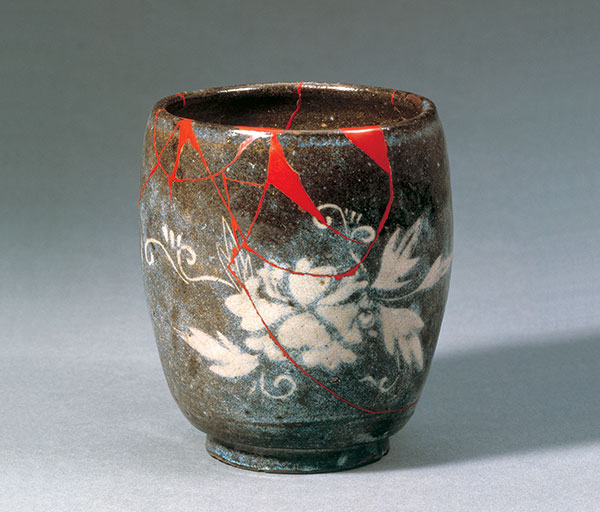
Edo period, 17th century
Eisei Bunko Museum
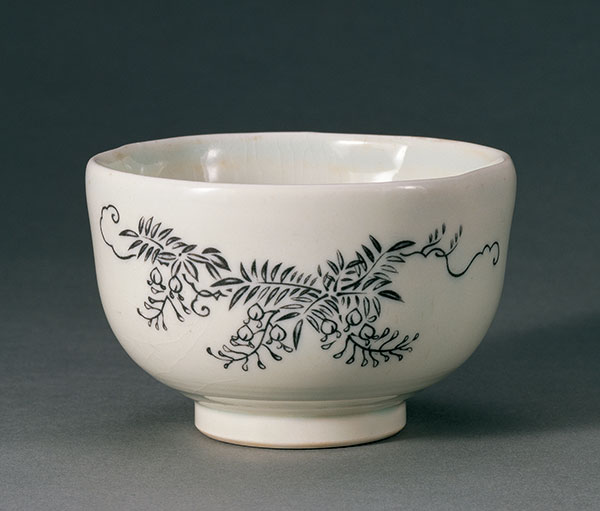
Edo period, 19th century
Eisei Bunko Museum
Early Summer Exhibition
Picturesque Landscapes of Kumamoto:
Ryonaimeishozukan, Longest but Unknown Handscroll in Japan
- Period
- Saturday, April 26 – Sunday, June 22, 2025
- Closed
- Mondays except May 5, 2025
Closed on May 7, 2025 - Opening hours
- 10:00am to 4:30pm (last entry 4:00pm)
Ryonaimeishozukan (Important Cultural Property Designated by Kumamoto Prefecture) is a set of 15 handscrolls depicting famous places, beautiful waterfalls, and riverside sceneries mainly in the Kumamoto domain, painted by Yano Yoshikatsu (1760-1821) and Eto Yoshiyuki (1761-1823), who served the Kumamoto clan as official painters. It is regarded as a pioneering example of “Shaseizukan” (handscrolls of sketches from life). With a height of approximately 60 centimeters and a total length of 400 meters, Ryonaimeishozukan is an exceptionally energetic and large-scale work of handscrolls. It was made by order of Hosokawa Narishige (1759-1835), the eighth head of the clan, who was known for his love of paintings. This exhibition presents the finest scenes selected from the fourteen surviving volumes to introduce the outstandingly lively depiction of the landscape. We hope the viewers enjoy the picturesque landscapes with abundant water and greenery and feel like traveling around Kumamoto.
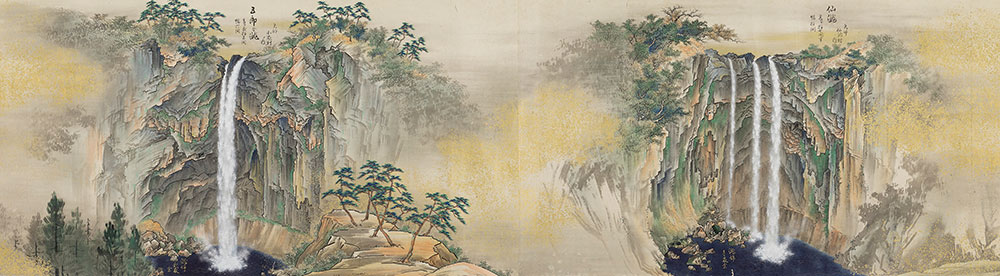
“Ryonaimeishozukan” Yabe village, Kamimashiki District (detail)
by Eto Yoshiyuki
1793 (Kansei 5)
Eisei Bunko Museum (Entrusted to Kumamoto Prefectural Museum of Art)
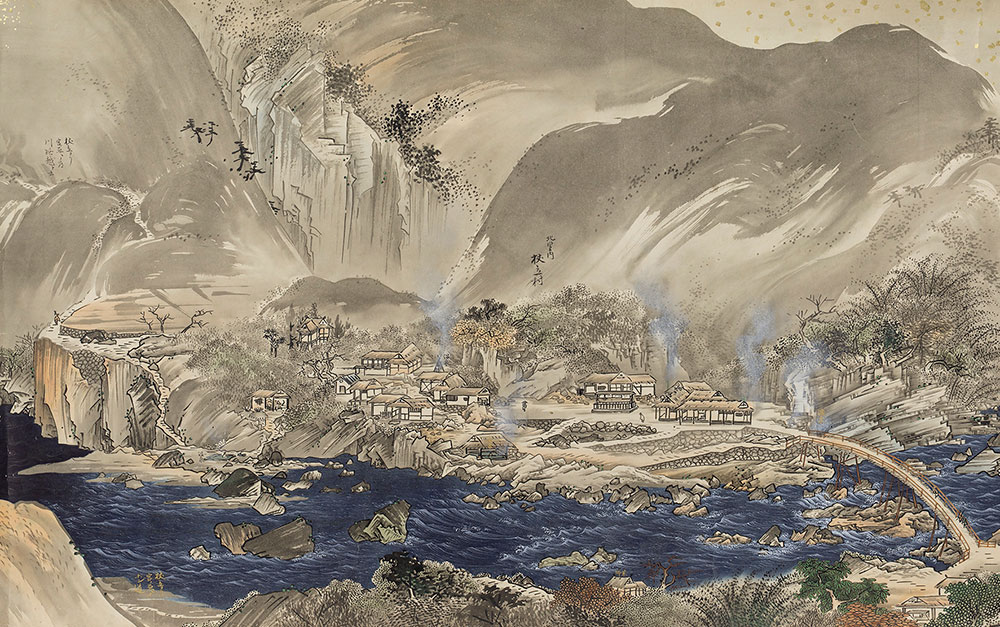
“Ryonaimeishozukan” Road over the Tsuetate River, Kitasato village, Aso District (detail)
by Yano Yoshikatsu
1793 (Kansei 5)
Eisei Bunko Museum (Entrusted to Kumamoto Prefectural Museum of Art)
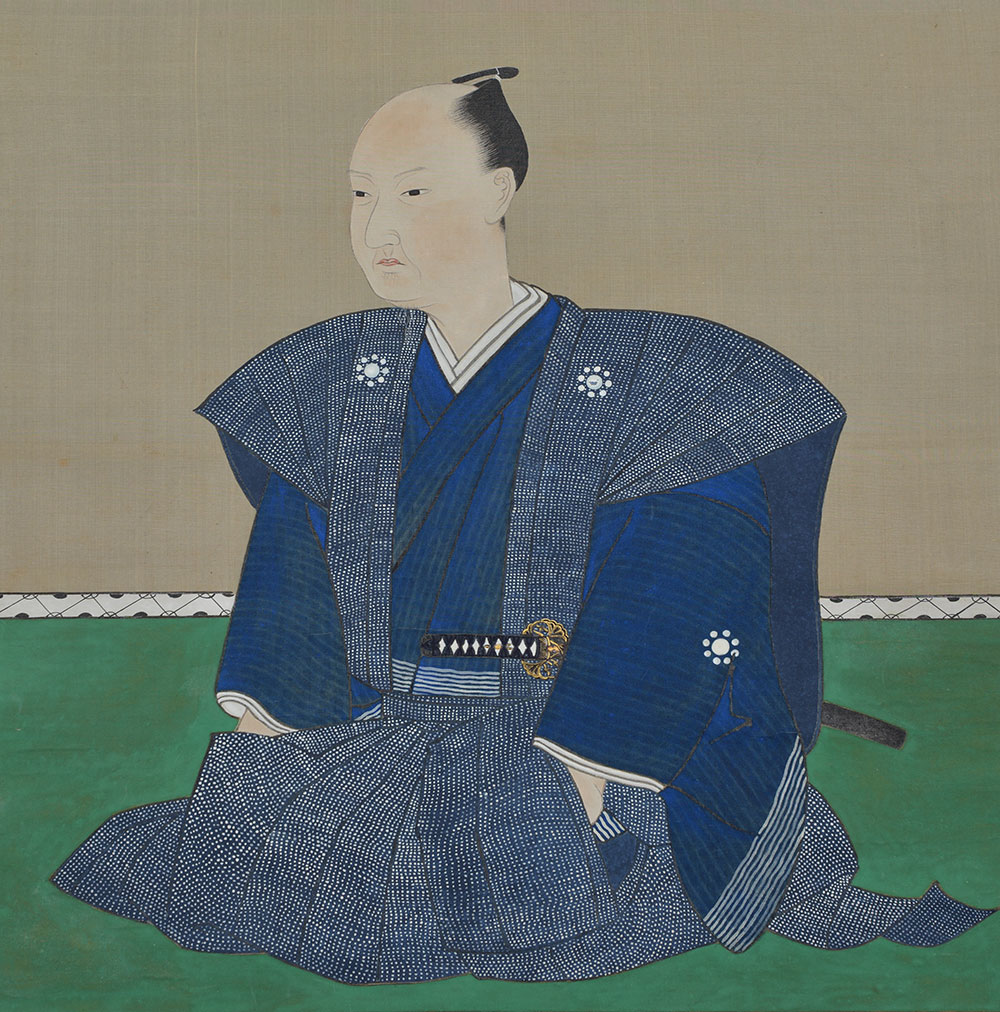
Edo period,19th century
Eisei Bunko Museum
Summer Exhibition
Elegant Utensils from the Scholar’s Study:
Beauty of the Four Stationery Treasures
- Period
- Saturday, July 5 – Sunday, August 31, 2025
- Closed
- Mondays except July 21 and August 11, 2025
Closed on July 22 and August 12, 2025 - Opening hours
- 10:00am to 4:30pm (last entry 4:00pm)
In China, the brush, inkstick, inkstone, and paper essential for writing and painting evolved over a long period and were valued by scholars as “Bunboshiho”. The term “bunbo” originally referred to a study for writing poetry and reading, where these essential items were particularly cherished as “shiho (four treasures)”. They were treasured not only for their practical use but also for their cultural value, and their materials and decorations became objects of appreciation. Hosokawa Moritatsu (1883-1970), the founder of Eisei Bunko, was one of the connoisseurs fascinated by Bunboshiho. He became familiar with Chinese classical literature since childhood, developed an interest in Chinese ceramics and Buddhist statues, and collected stationery. In his later years, Moritatsu is said to have had an inkstone and brush ready after dinner every day so that he could enjoy calligraphy. This exhibition presents a selection of stationery from his collection in the Eisei Bunko used in the process of "rubbing inkstick on an inkstone and writing on paper with a brush."
The exhibition also features smoking utensils such as tobacco pouches used to contain shredded tobacco. Their portable style was established as smoking became common in the Edo period. Please enjoy the exquisite decoration using various techniques and unique materials.
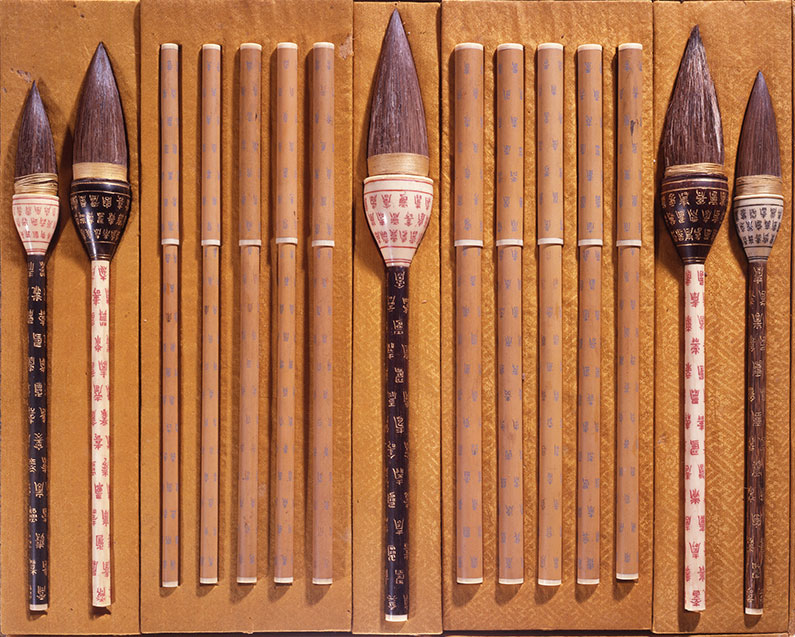
Eisei Bunko Museum
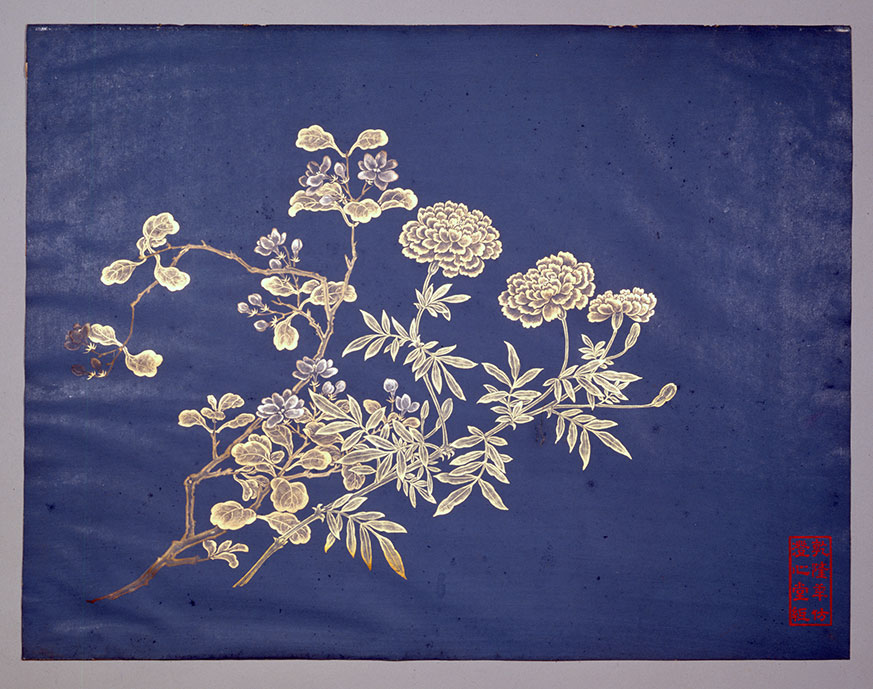
Eisei Bunko Museum
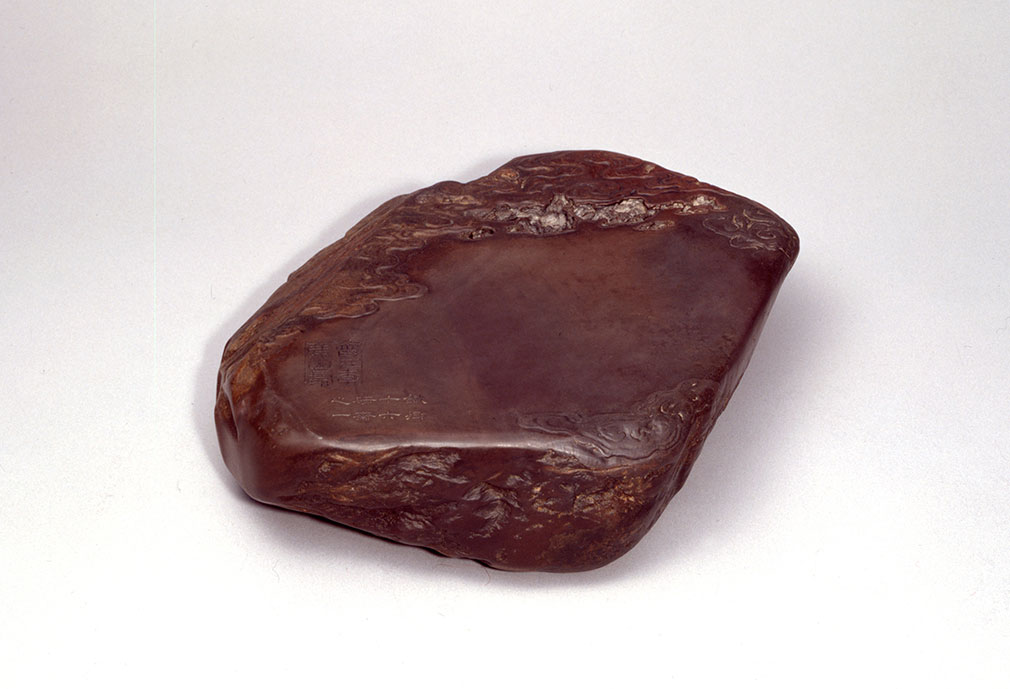
Eisei Bunko Museum
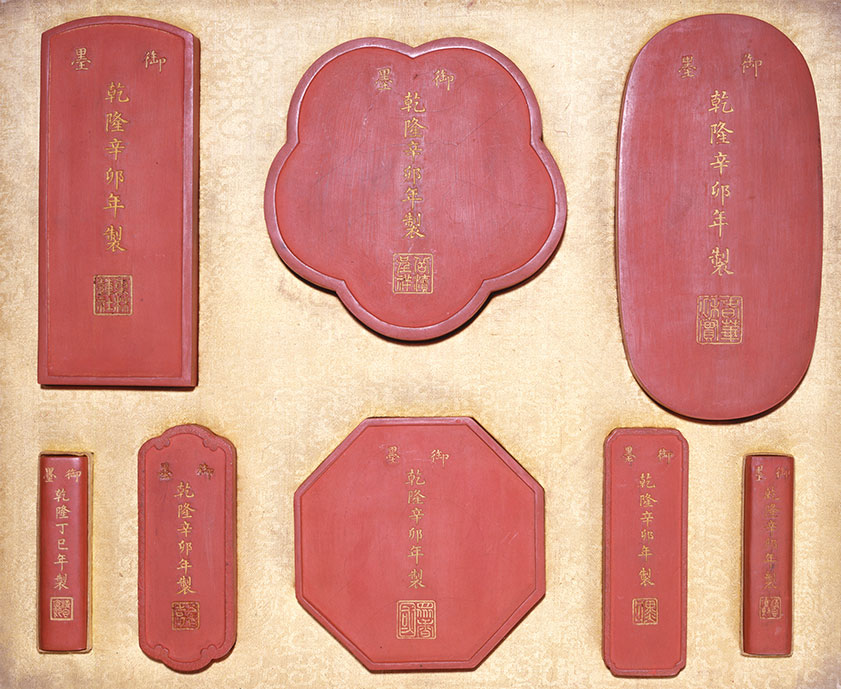
Eisei Bunko Museum
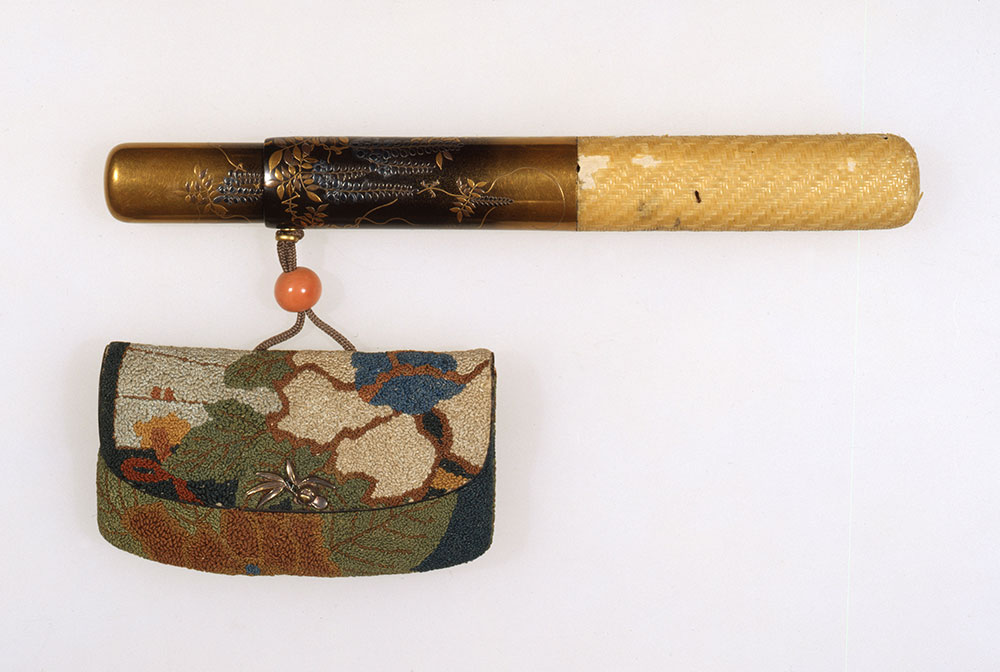
Eisei Bunko Museum
Autumn Exhibition
Commemorating the Completion of Conservation of “Black Cat”
The Essence of Modern Japanese Paintings from Eisei Bunko Collection:
The Cat Returns!
- Period
- Saturday, October 4 – Sunday, November 30, 2025
*Many of the items will be replaced during the exhibition period.
First Period: October 4 – November 3
Second Period: November 7 – 30 - Closed
- Mondays except October 13, November 3, and November 24, 2025
Closed on October 14, November 4 – 6, and November 25, 2025 - Opening hours
- 10:00am to 4:30pm (last entry 4:00pm)
“Black Cat” (Important Cultural Property) is known as a late masterpiece of Hishida Shunso, who died young at the age of 36. Hosokawa Moritatsu (1883-1970), the founder of Eisei Bunko Museum, was one of the first to appreciate Hishida Shunso and other painters of his time and actively collected their works. “Black Cat” is the most popular work in Moritatsu’s modern Japanese painting collection.
An intensive conservation of the painting was carried out thanks to crowdfunding support and financial assistance from the national government, Tokyo Metropolitan Government, and Bunkyo Ward. Celebrating the completion of the conservation, this exhibition, though for a limited period, features all four works by Hishida Shunso in the Eisei Bunko collection including “Black Cat” and “Fallen Leaves” (Important Cultural Property) together with fine works by leading modern Japanese painters such as Yokoyama Taikan, Shimomura Kanzan, and Kaburaki Kiyokata. Two calligraphic works, designated as Important Cultural Property, by Chinese Zen priests, Seisetsu Shocho and Soseki Bonki are exhibited for the first time after their conservation.
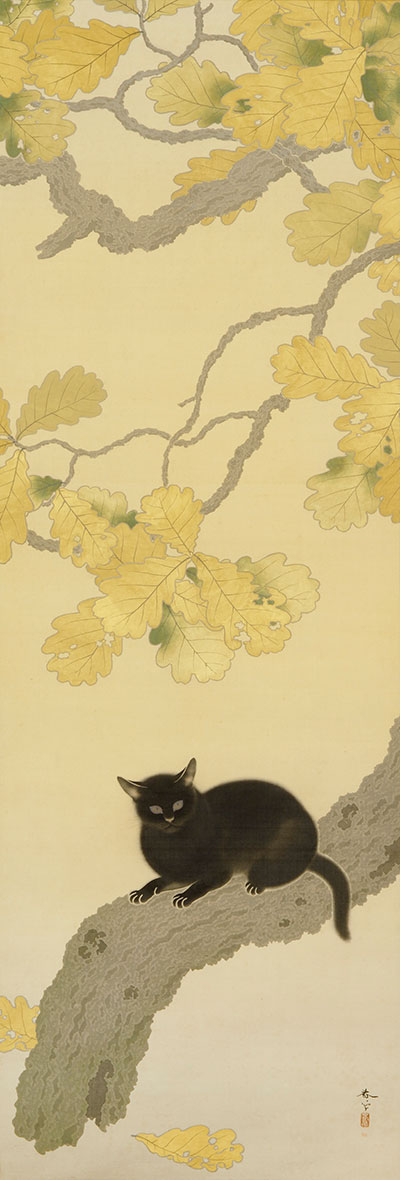
Black Cat
by Hishida Shunso
1910
Eisei Bunko Museum
[on view:October 4 - November 3]
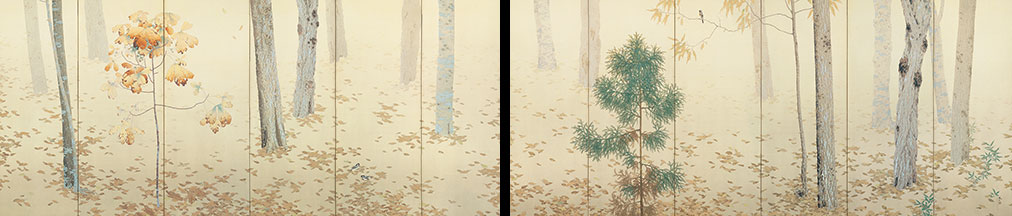
Fallen Leaves
by Hishida Shunso
1909
Eisei Bunko Museum (Entrusted to Kumamoto Prefectural Museum of Art)
[on view:November 7 - 30]
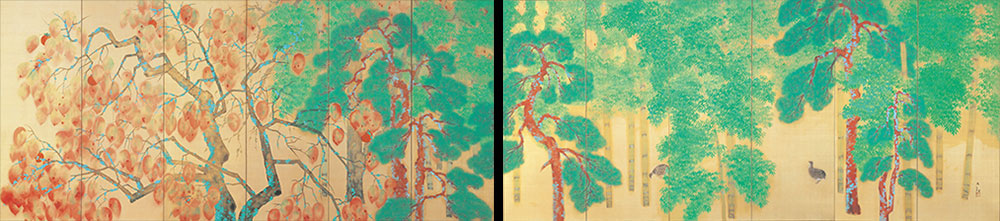
by Yokoyama Taikan
1920
Eisei Bunko Museum (Entrusted to Kumamoto Prefectural Museum of Art)
[on view:October 4 - November 3]
*The paintings on this page are on display during either half of the exhibition period.